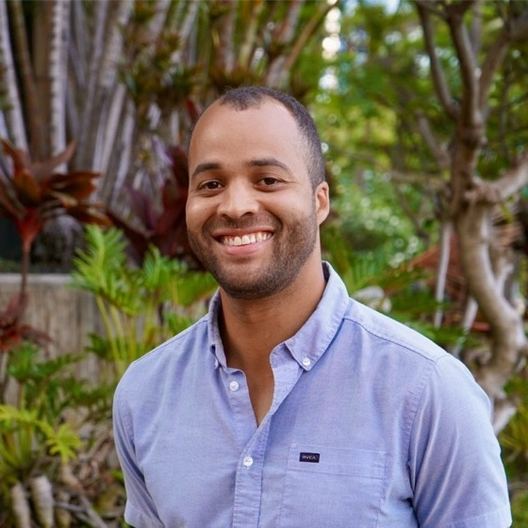
I work on the things that decide whether a family makes it to the end of
the month: what a job pays, whether there’s food in the kitchen, whether a kid eats lunch
at school.
Eight years across public health and economic security — from the
minimum wage and food assistance to tobacco and campaign finance. What I actually do is
build the coalition: find the people the change belongs to, prepare them, and put them in
front of the committee. I write the bill and the research too.
Seven became lawMore than 20 bills testified on since 2019Frosted Aura · DeepFigma scheme 32 · blue 3 of 3
None of these were won alone.
Every one took a coalition, and building it was my job. The work I’m
proudest of isn’t a bill number — it’s the parents and workers who found out that three
minutes of testimony from someone living the problem carries further than anything I can say.
Every claim below links to the document that proves it.
I founded Living Wage Hawaiʻi in 2018 and ran it as a volunteer while working full time in mortgage lending. Over four legislative sessions we made the case in print, on the air, and at the Capitol. In 2022 Hawaiʻi became the first state to write an $18 minimum wage into law, lifting pay for about 192,000 workers.
People should be able to afford their basic needs on 40 hours a week. Otherwise people are forced to work multiple jobs or sacrifice their basic necessities like food, shelter, clothing.
My roleFounded the coalition; co-authored the analysis
OutcomeState dropped the test
Scale50,000 households eligible
Families were losing food assistance to an income test the state didn’t have to apply. I co-authored the analysis that showed what it was costing them, the Governor announced the change the same day it was published, and the test was gone by February 2025. An estimated 50,000 more households now qualify, worth a projected $40–45 million a year in federal food aid.
This is an enormous opportunity. Federal SNAP benefits are a federally funded program, and so the more residents we can have who are eligible, the better. It’s just bringing in free money to our state for low-income residents who are in need.
School meal rules left working families just above the cutoff paying full price. I helped lead the four-organization coalition behind Act 139, and coached the teachers and parents who carried it at the Capitol. The law extends free breakfast and lunch to families earning up to 300% of the federal poverty level: about 11,000 students in the first year, and nearly 12,000 more in the second.
Expanding free school meal access is an important step to the ultimate goal of ending childhood hunger.
Hawaiʻi became the first state in the nation to strip corporations of the power to spend in its elections. I testified for the bill three times across two chambers, and wrote the analysis of how concentrated political giving here had become. The law takes effect in July 2027 and is being tested in federal court.
This one was decades in the making — a tobacco-control coalition that had been winning restriction after restriction here long before this bill. Act 189 prohibits the sale of disposable electronic smoking devices, the cheap, sweet, throwaway kind that got a generation of teenagers started. I wrote the bill. The coalition is why it passed. Signed in July 2026; sales end January 1, 2027.